Category: Local Tragedy

  • A Mother’s Journey Beyond Tragedy: The Story of Bessie Abbott

    WARNING: Please note that some of the content of this story can be upsetting.

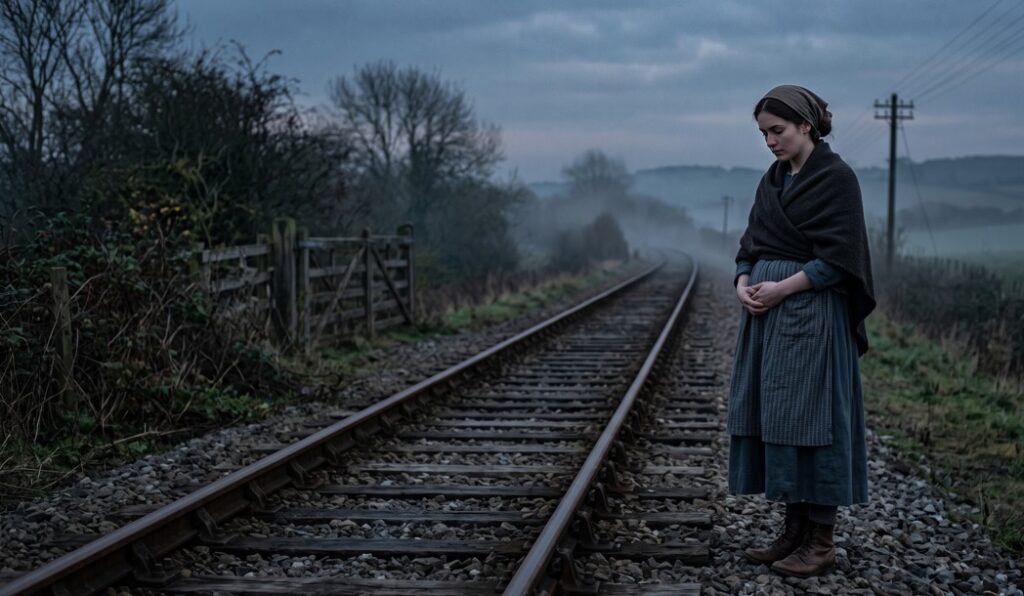
    In March 1914, a routine walk along a railway line near Felixstowe led to a deeply unsettling discovery. A railway worker came across a small parcel lying beside the tracks. On closer inspection, he was faced with the tragic sight of a newborn baby boy, carefully wrapped and abandoned.

    Police were called immediately, and the infant was taken away for examination. The baby had been wrapped in layers of paper and cloth, and among them was a newspaper dated several weeks earlier. Written across it was a simple phrase: “God save the King.” It was a small but significant detail—one that would soon lead investigators closer to the truth.

    A Crucial Clue

    As news of the discovery spread through the local community, a woman came forward with an important memory. She recognised the wording written on the newspaper, recalling that her nephew had scribbled the same phrase on a paper not long before. The newspaper had passed through several hands within the family before eventually reaching a household where a young woman, Bessie Abbott, had been living as a lodger.

    That single recollection provided police with the link they needed.

    Suspicion and Questions

    People in the household began to reflect on recent events. In the days leading up to the discovery, Bessie had appeared unwell and withdrawn. She had gone to bed early one evening, been restless through the night, and continued to behave unusually the following day.

    Soon after, bloodstained laundry was found—something that raised quiet but unavoidable concern. Though initially unspoken, these observations would soon become central to the investigation.

    A Confession

    When approached by police, Bessie admitted that she was the baby’s mother. She explained that she had given birth alone and that the child had not survived long after delivery.

    She was a young working woman with little support, and the child’s father had already left when he learned of her situation. Faced with fear, isolation, and limited options, she had been forced to handle everything by herself.

    The Court’s Decision

    Although the case was initially treated as a possible murder, there was not enough evidence to support that charge. Instead, Bessie was found guilty of failing to report the birth and not seeking medical assistance.

    She was sentenced to a term of hard labour. While the punishment was serious, it also reflected some understanding of the difficult circumstances she had faced.

    Life After Tragedy

    What followed makes this story all the more remarkable.

    Rather than leaving the area, Bessie remained. In time, she married and began to build a new life. Over the years, she raised a large family and created a stable home, something that must once have seemed unimaginable.

    She lived a long life, reaching old age surrounded by the family she had built.

    A Story of Its Time

    Bessie Abbott’s story is a powerful reminder of the realities faced by many women in the early 20th century. Unmarried mothers often lived under intense social pressure, with little support and few choices.

    While this story begins with tragedy, it does not end there. It is also a story of survival, resilience, and the possibility of rebuilding a life, even after the most difficult of circumstances. Previously told in Family Tree Magazine 2025
  • The Boy Who Never Came Home: GUN COTTON WAY

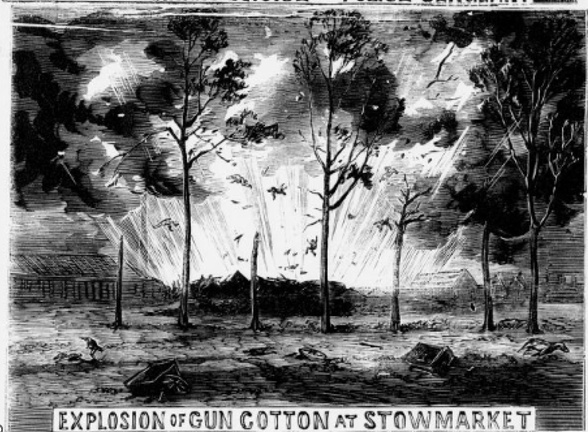
    Have you ever wondered where the name of a street comes from? In Stowmarket, Gun Cotton Way carries the story of one of the town’s most serious industrial disasters. On 11 August 1871, two explosions tore through Prentices Guncotton Factory. Twenty eight people were killed and more than seventy were injured, including many children as young as twelve. The road lies close to the original site of the works and serves as a memorial to everyone who lost their lives that day.

    Guncotton was made by treating cotton with acids, then washing and drying it. Although it looked harmless once finished, the process demanded great care. Small changes in temperature, purity, or drying conditions could make it unstable. On the day of the disaster the first blast destroyed part of the works and sent shockwaves across the town. A second explosion struck the packing area, fires spread quickly, and nearby homes were damaged. The scene was filled with smoke, debris, and frantic attempts to reach the injured.

    An inquiry followed and brought together accounts from workers, managers, medical staff, and technical specialists. They described the daily routine inside the factory, how the cotton was handled, and whether anything unusual had been noticed that morning. Despite this, the inquiry could not confirm a single cause.

    Among those killed was twelve year old Alfred Bloom. Born in 1859 in Haughley to Edward and Eliza Bloom, he grew up in a large family. Edward worked on the railways as a platelayer and fettler, jobs that involved demanding maintenance work on the tracks. Alfred was one of nine children at the time and the family expanded further after his death. His loss would have deeply affected them in every way.

    Alfred was one of four twelve year olds who died that day. Children of his age were working in factories because Victorian labour laws still allowed it, particularly in rural and industrial communities. Regulations were limited and unevenly enforced, and many families depended on the wages their children could earn. With schooling not yet compulsory, young people often started work as soon as they were able.

    Inside the guncotton works, younger workers carried out lighter tasks, such as moving materials, carrying cotton, or helping adults in the washing and drying rooms. These jobs were still dangerous. When the explosion happened Alfred’s thigh was broken and he did not survive his injuries. Medical treatment was limited and there was little that could be done. Some workers died in the first blast, while others were caught in the second as people ran towards the factory to see what had happened.

    This was not the first incident at the site. An earlier explosion in 1867 killed a cow in a neighbouring field, though no people died on that occasion.

    Alfred was buried in Haughley on 14 August 1871. Only a few weeks earlier, on 17 July 1871, his four year old sister Phoebe had also died, her cause of death was an illness but the family faced the loss of two children within a short time, adding to the hardship they were already living through. There is much more to this family.

    Walking the road today brings you close to where the factory once stood. Gun Cotton Way carries the memory of those who died and reminds us that industrial work in the nineteenth century involved dangers that were not fully understood. The name stands as a quiet acknowledgement of the people who worked there, and those who never returned home.

    Authored by me on the basis of archival documents and historical research, this story has been adapted for video and narrated by Carl Scott of Woodfarm Barns. Please follow the links to watch this story and further films in the same series.