Looking forward to speaking about St Audry’s Asylum on Thursday 8th October. https://sog.org.uk/welcome-to-all-about-that-place/
Looking forward to speaking about St Audry’s Asylum on Thursday 8th October. https://sog.org.uk/welcome-to-all-about-that-place/
Local newspapers often preserve stories that would otherwise be lost to history. One such report appeared in the *Downham Market Gazette* on 19 July 1884, detailing the tragic death of a young Suffolk boy.
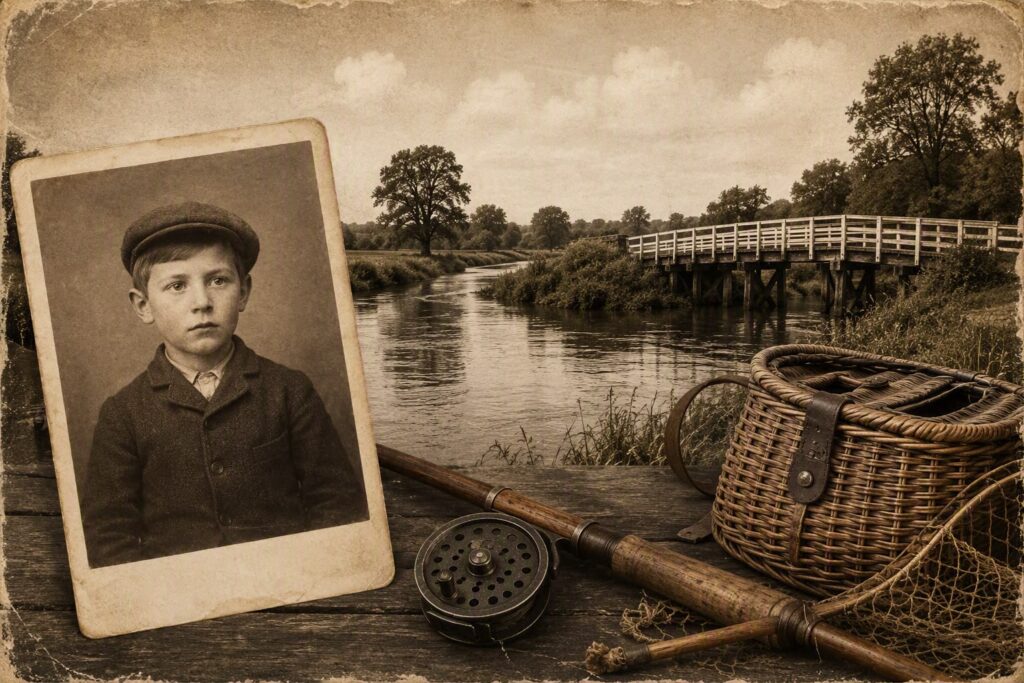
An inquest was held at Wickham Market into the death of ten-year-old Albert Marlin Walker. According to the report, Albert had been in a meadow with his grandmother. At some point, he was instructed to go to the bridge on the turnpike road and fish.
The newspaper records that Albert caught a small roach and removed it from the hook. While re-baiting, with his back turned to the river, he fell into the water.
Assistance was quickly sought, and Albert was eventually pulled from the river. Sadly, despite these efforts, he had been underwater for too long. By the time he was recovered, life was extinct.
During the inquest, Mr George Reeve confirmed that death had resulted from drowning. The coroner’s jury returned a verdict accordingly.
The brief report occupies only a few lines in the newspaper, yet it reveals the stark realities of Victorian childhood. Fishing was a common pastime for children in rural Suffolk, and young people often spent time outdoors with relatively little supervision by modern standards. The river that provided recreation and food could also become a place of sudden tragedy.
More than 140 years later, Albert Marlin Walker’s story survives through local newspapers and inquest records, providing a poignant reminder of the fragility of life in nineteenth-century Suffolk.
*Source: Downham Market Gazette, 19 July 1884.*
We spend a lot of time here sharing the stories of people who lived generations ago — but what about the stories in your own family?
If you’ve ever wondered who your ancestors were, where they lived or what their lives were like, starting a family tree can be a fascinating way to find out. Even a single name or date can be the beginning of a much bigger story.
If you’ve been thinking about researching your own family history, Trace Your Past is a useful place to start:
You never know what stories might be waiting to be discovered.
Affiliate disclosure: This is an affiliate link, meaning we may receive a small commission if you sign up. There is no additional cost to you, and it helps support the family-history content we create.
On the morning of 27 January 1891, the quiet Suffolk village of Bacton became the scene of a tragedy that would shock the local community.
At around half past nine, Emma Shelley Hearn was carrying out her usual household duties in the kitchen of Oak House. Her youngest daughter was nearby, and there was little to distinguish the morning from any other. When her husband, Charles Walter Hearn, entered the room, their conversation turned to an elderly villager whom Emma had been helping. She suggested that he might go out and shoot a rabbit for the man.
Charles agreed and left the kitchen to fetch his double-barrelled breech-loading gun from his office.
To all appearances, there was no cause for concern. The weapon had not been used for more than two months and was believed to be unloaded. Returning to the kitchen with the gun tucked under his arm and two cartridges in his hand, Charles continued the ordinary routine of the morning. Emma handed him another cartridge while they spoke.
Then, without warning, disaster struck.
The gun suddenly discharged. Unknown to either husband or wife, one barrel remained loaded. The shot struck Emma, who fell immediately. The cartridge she had just been holding remained in her hand.
Realising what had happened, Charles rushed to her side. Medical assistance was summoned at once, and Mr Cuthbert of Mendlesham attended as quickly as possible. However, the devastating truth soon became clear. Emma’s injuries were fatal, and nothing could be done to save her.
An inquest was held to investigate the circumstances of the shooting. Witness testimony and evidence confirmed that the incident was entirely accidental. The tragedy stemmed from the mistaken belief that the gun was unloaded, a fatal assumption that transformed an ordinary household moment into a catastrophe.
For the people of Bacton, the event served as a painful reminder of how fragile life could be. There had been no quarrel, no recklessness, and no intention to cause harm. Instead, a routine conversation in a family kitchen ended in irreversible loss.
Just three days later, on 30 January 1891, Emma Shelley Hearn was buried in Bacton. Today, more than a century later, her story remains a poignant reminder of the human tragedies hidden within local newspaper reports and parish records, moments when ordinary lives were suddenly and irrevocably changed.
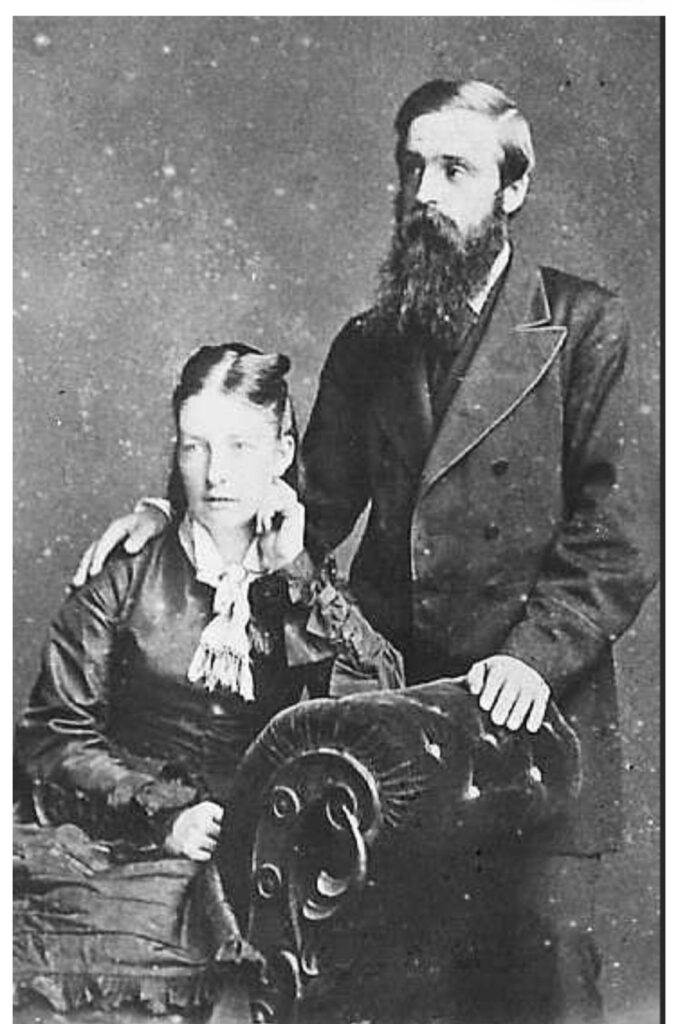
This week I have been reading asylum medical case notes, and what strikes me most is how recent many of these stories really are.
We often think of Victorian asylums as belonging to a distant past, yet the people whose lives fill these records lived during the lifetime of many of our great-grandparents.
That realisation makes the history feel much closer to home.
In October 1884, Hannah Woods Peck entered the Suffolk County Asylum. The records describe her as a married woman from Woodbridge, aged forty-eight, whose occupation was recorded simply as “housewife”. Born in 1836, Hannah belonged to a generation of women whose lives were largely documented only when something went wrong.
Doctors diagnosed Hannah with what they called “chronic mania”. According to the admission register, the illness had first appeared when she was around forty-three years old. The official cause was recorded as heredity, reflecting a widespread Victorian belief that mental illness ran in families. Yet Hannah’s age is striking. Her symptoms emerged during the years that many women experienced the physical and emotional changes associated with menopause.
Victorian medicine frequently linked women’s mental health to the reproductive body. Doctors often wrote about the dangers of menstruation, childbirth and the “change of life”, believing each could affect the mind. While modern historians would be cautious about assigning a single cause to Hannah’s condition, it is possible that menopause, alongside other pressures of everyday life, played some role in the symptoms recorded in her case notes.
Those notes describe a woman struggling with restlessness, sleeplessness and periods of excitement. She was said to talk to herself and behaved in ways that relatives and doctors considered irrational. Such behaviour was often viewed as evidence that a person could no longer be safely managed at home.
Hannah’s admission also highlights the position of married women within Victorian society. Contrary to popular belief, a husband could not simply place his wife in an asylum by personal request. The law required medical certification. However, husbands, relatives and neighbours frequently provided the evidence on which those decisions rested. Doctors and magistrates often relied heavily on family testimony when deciding whether someone should be confined. As a result, women’s voices were frequently absent from the official record.
Life in the asylum was not necessarily a constant decline. Hannah’s case notes reveal periods of improvement. Doctors recorded occasions when she was quieter, occupied herself with sewing and caused little disturbance. At other times she became more excitable and irrational. Like many asylum patients, her condition appears to have fluctuated rather than followed a simple path.
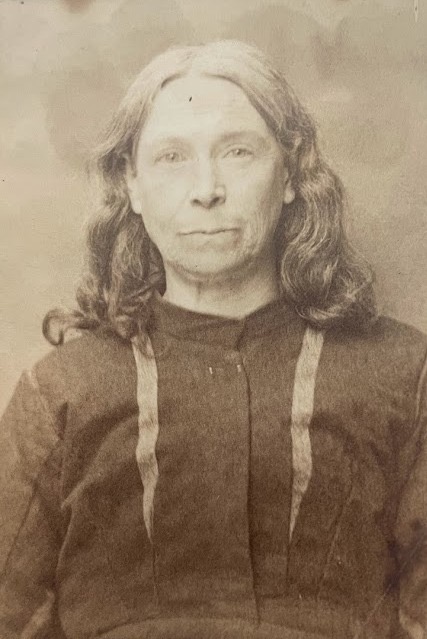
The photograph attached to Hannah’s record is perhaps the most powerful surviving piece of evidence. Looking at it today, we see not a diagnosis but a person. The image preserves a moment in the life of a Suffolk woman whose own voice is almost entirely absent from the archive.
Hannah died in 1888, only four years after her admission. We cannot know exactly what she experienced or how she understood her illness. What survives instead are the observations of doctors, the concerns of relatives and a photograph that has outlived them all.
Her story is a reminder that many Victorian women entered asylums at a stage of life when physical, emotional and social pressures often converged. Whether Hannah’s illness was connected to menopause, hereditary factors, or circumstances now lost to history, her case reflects the complex reality of women’s mental health in nineteenth-century Suffolk.
Caution: This story contains material that some readers may find distressing.
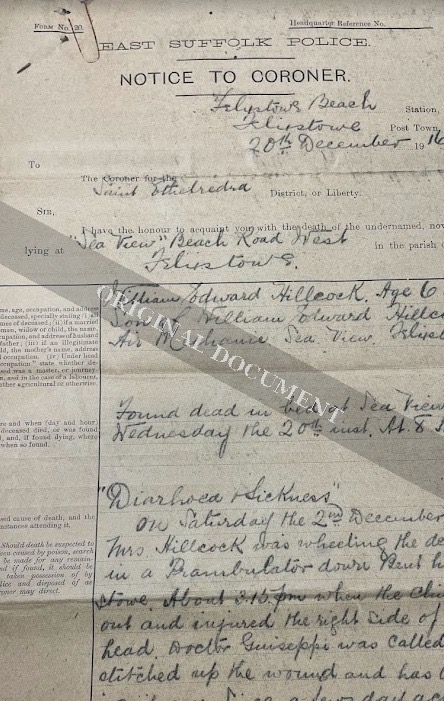
Among the records held at the Archives are documents that reveal the stories of ordinary families whose lives rarely appear in history books. One such file concerns six-month-old William Edward Hillcock of Felixstowe and a tragedy that unfolded in the winter of 1916.
The story begins with a police notice sent to the coroner on 20 December 1916. The document reported the death of William Edward Hillcock, the infant son of William Edward Hillcock, an air mechanic, and his wife Charlotte Ethel Hillcock. The family lived at Sea View on Beach Road West in Felixstowe.
At first glance, the circumstances seemed straightforward. The police report stated that William had been found dead at approximately 8 a.m. that morning and suggested the cause of death was “diarrhoea sickness”, a common term used at the time for severe gastrointestinal illness in infants.
However, as further documents reveal, the story was more complicated.
Just over two weeks earlier, on 2 December 1916, Charlotte Hillcock had been wheeling her son in his pram down Bent Hill in Felixstowe when he accidentally fell out, injuring his forehead. The child was treated by Dr Paul Leon Giuseppi, who stitched the wound and continued to monitor his condition.
The accident naturally raised concerns when the baby later died. Had the injury contributed to his death?
The surviving correspondence shows that the coroner sought clarification. In a note sent shortly before the inquest, the police informed the coroner that Dr Giuseppi could not connect the pram accident with the child’s death. Medical evidence suggested the head injury was not responsible.
An inquest was held at Felixstowe on 23 December 1916 before Coroner Walter Brooke.
Witness statements preserved in the file provide a glimpse into the family’s final days with their son.
Dr John Laurence Johnson testified that he had been called on the day of William’s death but found the child already dead upon arrival. He confirmed that the infant had suffered a fall from his pram earlier in the month and noted that sickness and diarrhoea had developed shortly before death.
Dr Giuseppi also gave evidence. He recalled treating the forehead wound following the accident and described William as a strong, healthy child before his final illness. He too stated that sickness and diarrhoea had appeared in the days leading up to the child’s death.
The most moving testimony came from William’s mother, Charlotte.
She explained that her son had become restless during the night of 19-20 December. Concerned for his comfort, she took him from his pram and placed him in bed with her. She checked on him during the night and believed he was well. When she awoke at around 8 a.m., she discovered that he had died.
The medical evidence led Dr Giuseppi to offer a different conclusion from the one originally recorded by the police. In his opinion, William’s death was caused by suffocation after being accidentally overlaid.
In the language of the time, “overlaying” referred to the accidental suffocation of an infant while sharing a bed with an adult. Such deaths were sadly not uncommon in the early twentieth century, particularly among families caring for sick children during cold winter nights.
The jury returned its verdict on 23 December 1916:
“Death from suffocation from being accidentally overlaid whilst in bed with his parents.”
More than a century later, these documents remind us that family tragedies were recorded not only in parish registers and death certificates, but also in the detailed statements collected by coroners. Through the testimony of doctors, police officers and grieving parents, the records allow us to reconstruct a small but deeply human story from Suffolk’s past.
For William Edward Hillcock, whose life lasted only six months, the archive preserves the final chapter of a life that might otherwise have been forgotten.
In March 1891, an inquest held at the Ipswich and East Suffolk Hospital examined the death of Walter Bennett, a 30-year-old labourer from Rushmere.
Walter was the son of James Bennett of Clopton and worked for Mrs King of Rushmere. On the evening of 20 March, he attended the Woodbridge Horse Show before stopping at the Admiral’s Head in Bealings with friends and acquaintances, including George Brown and Harry Nunn.
Witnesses stated that Walter had been drinking, but was not considered intoxicated. At around ten o’clock he began his journey home. Brown and Nunn also left and, after passing Walter on the road and exchanging goodnights, continued on their way.
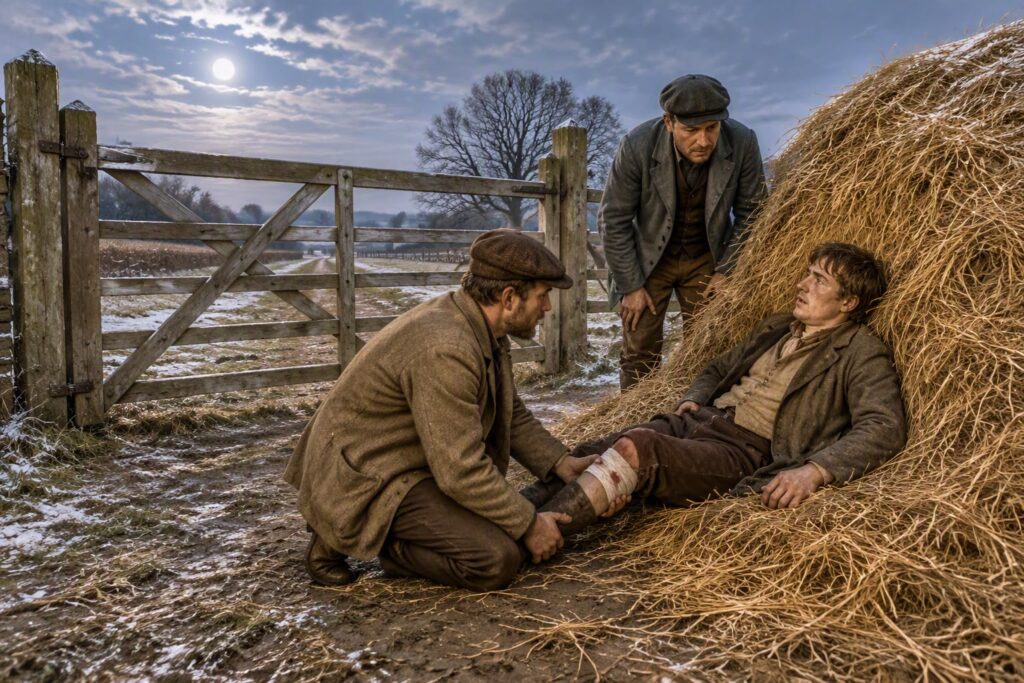
Approximately ten minutes later, Brown remembered that Walter had left a parcel behind. Returning with Nunn, they found him lying in a meadow near a high gate. Walter told them he had injured his neck but refused to go home with them. Rather than seeking further assistance, the two men carried him to a nearby straw stack, covered him with straw, and left him there for the night.
The following morning Brown returned and found Walter in the same place. He was still alive but complained of an injured leg and said he had fallen over the gate the previous evening. Walter was then taken to the East Suffolk Hospital.
Medical evidence revealed that he had suffered a fractured spine. Although he survived for some time after admission, his condition deteriorated. The immediate cause of death was recorded as oedema of the lungs, brought on by complications associated with the spinal injury.
Hospital staff testified that Walter had told them he fell from a gate and that two men had subsequently placed him on a straw stack. He made no complaint against them, but the circumstances surrounding his treatment on that bitterly cold night became a major focus of the inquest.
The coroner was critical of Brown and Nunn, describing their actions in leaving an injured man outdoors under a little straw as inhumane. Although the medical evidence could not establish whether the exposure directly caused or accelerated Walter’s death, the jury expressed their clear disapproval.
The verdict was one of accidental death. However, the jury also recorded their indignation at what they described as the heartless and cruel manner in which Walter Bennett had been left exposed to the elements. For many in attendance, this aspect of the case was as troubling as the accident itself.
More than 130 years later, Walter Bennett’s story provides a stark reminder of the dangers faced by rural labourers and of the expectations Victorian communities placed upon neighbours in times of need.
On a winter afternoon in December 1835, a Suffolk workhouse found itself at the centre of a dramatic confrontation that reflected a growing national crisis.
Just one year earlier, the Poor Law Amendment Act of 1834 had transformed the way relief was provided to the poor. For centuries, individual parishes had offered support to those unable to support themselves through a mixture of money, food, clothing and housing. The new legislation swept much of that system away.
Under the new arrangements, parishes were grouped into Poor Law Unions and administered by Boards of Guardians. Most controversially, the government insisted that relief should increasingly be provided through the workhouse. Conditions within these institutions were deliberately made difficult. Policymakers believed that life inside the workhouse should be less desirable than life outside it, even for the lowest-paid labourer. The aim was to discourage reliance on poor relief and reduce costs to ratepayers.
For many working people, however, the New Poor Law represented something far more frightening. Families could be separated. Elderly people who had previously received support in their own homes often faced the prospect of entering the workhouse. Agricultural labourers, already struggling with low wages and uncertain employment, viewed the new system with suspicion and anger.
It was against this backdrop that events unfolded on 21 December 1835.
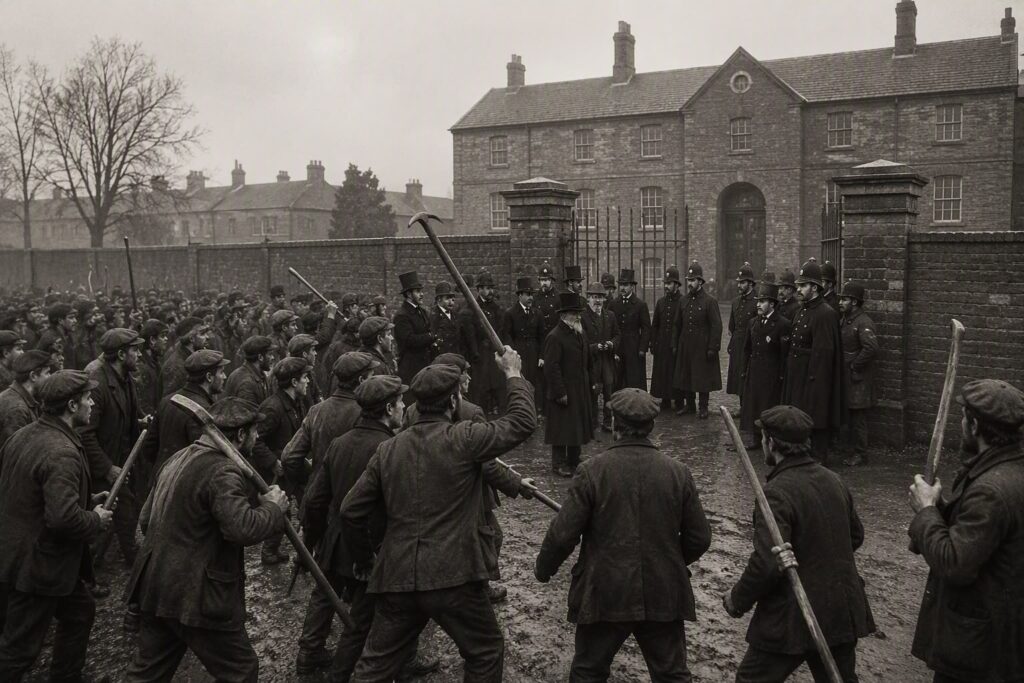
Reports reached the local Board of Guardians that a large body of men, armed with pickaxes, crowbars and other tools, were advancing towards Blything Union workhouse
from several directions. Fears quickly spread that an organised attack was imminent.
The Guardians reacted immediately. A messenger was sent to Colonel Bence, and emergency appeals for assistance were dispatched throughout the surrounding area. Local authorities scrambled to gather as many constables as possible to defend the building.
Help soon arrived. A wagon came from Wangford carrying volunteers ready to be sworn in as Special Constables. More constables travelled from Halesworth, while local gentlemen and officials joined the growing defence force. Together they prepared for the possibility of violence.
Not every community responded in the same way. Contemporary accounts expressed frustration that Southwold refused to send assistance despite repeated requests. In the eyes of the Guardians, neighbouring towns were rallying to protect the workhouse while Southwold stood aside.
As the afternoon progressed, tensions intensified.
At around two o’clock, a crowd estimated at 200 people was seen approaching the workhouse from the direction of Halesworth. The Guardians, accompanied by local magistrates, Colonel Bence, the Reverend Anthony Collett and Thomas Wood, went to meet them at the gates.
The authorities attempted to reason with the crowd, hoping to prevent the situation from escalating. Yet persuasion achieved little. Faced with what they saw as a serious threat to public order, the magistrates took the significant step of having the Riot Act read aloud by Reverend Collett.
The reading of the Riot Act was not a casual measure. It was a formal warning that those gathered could be treated as an unlawful assembly and face prosecution if they failed to disperse.
After lengthy discussions, the crowd finally withdrew. The immediate danger had passed.
Yet the protesters left with a final warning: they threatened to return in even greater numbers on another occasion.
Although no attack ultimately took place, the incident offers a powerful glimpse into the hostility that greeted the New Poor Law in its earliest years. The workhouse was not simply a building. To many labouring families, it symbolised a loss of local control, the fear of family separation and uncertainty about the future. The fact that hundreds were willing to march on a workhouse only a year after the legislation was introduced demonstrates the depth of feeling it provoked.
Nearly two centuries later, this forgotten Suffolk confrontation reminds us that the Poor Law was never merely an administrative reform. For ordinary people, it touched every aspect of daily life and could provoke resistance strong enough to bring hundreds to the workhouse gates.
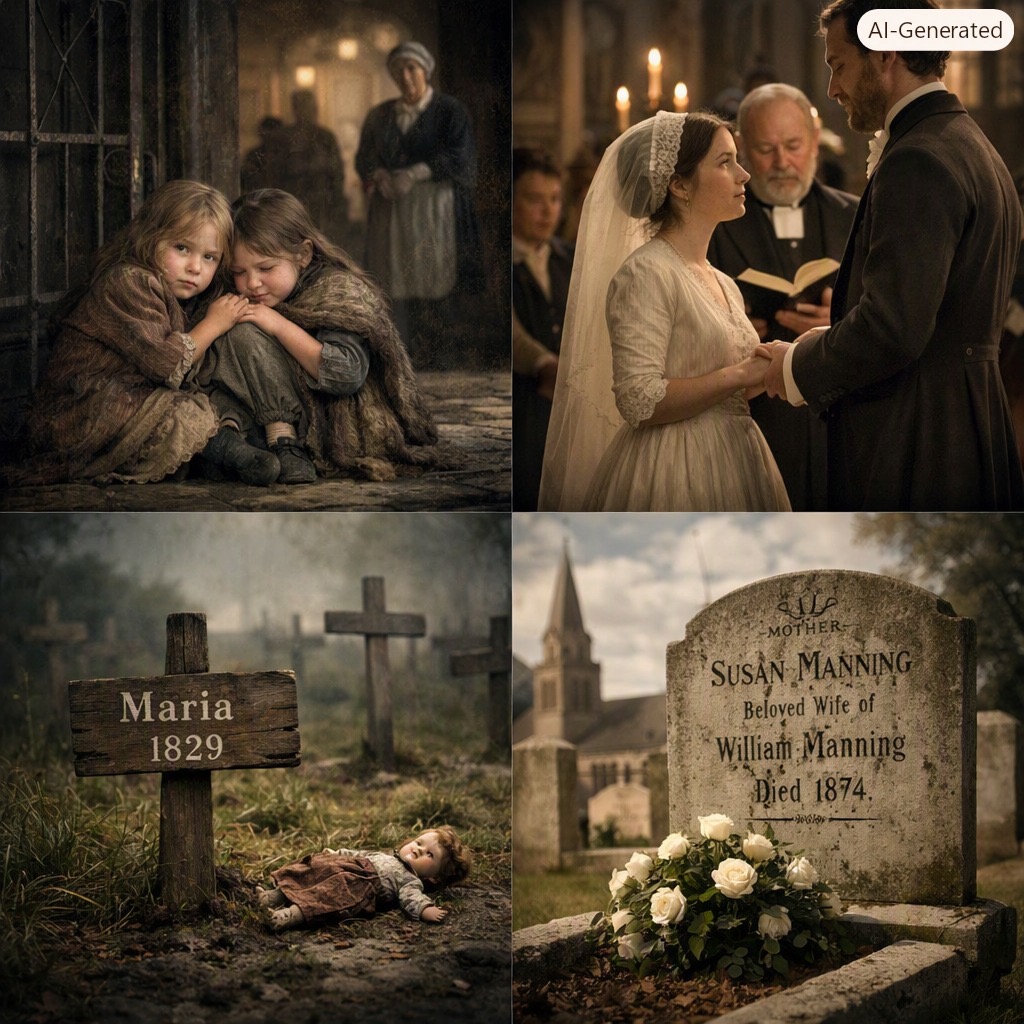
Family history research often leads us into the quiet corners of the past, where the most powerful stories wait to be rediscovered. This is one such story. It begins in early nineteenth‑century Suffolk, where a young woman named Susan Lawrence made a decision that would shape the fate of her twin daughters for the rest of their lives.
A world shaped by poverty and judgement
Suffolk’s agricultural communities were governed by strict social hierarchies and the unforgiving Poor Law system. For women, the expectations were even harsher. Illegitimacy carried deep stigma, and single mothers often faced impossible choices with very little support.
Susan grew up in Bawdsey in a hardworking but respectable family. Her father, a farm labourer, managed to keep them out of the workhouse, which was no small achievement in a region where poverty was ever present. At twenty‑seven, Susan left her village for the anonymity of a nearby town. It was there that she gave birth to twin girls, Maria and Elizabeth, both baptised as illegitimate.
A mother alone
Susan lived alone in the town and struggled to provide for her daughters. For four years she persevered. Then, in April 1828, the twins were found abandoned at the workhouse. At first, it is easy to imagine illness or desperation forcing her hand.
However, the records reveal a painful detail. Susan had married William Manning just five days earlier.
What became of the twins
The 1841 Census shows Susan living with William and their four children. Maria and Elizabeth are absent. Workhouse records confirm the truth. Maria died in 1829 and was buried in the pauper burial ground at Nacton. Elizabeth remained in the workhouse and disappears from the records after 1841. Her fate is unknown, lost to gaps in the registers and the silence of history.
A grave that hides a story
Susan and William were buried together at St Peter and St Paul’s Church in Felixstowe. Their grave is respectable and gives no hint of the daughters left behind. Standing there today, it is impossible not to wonder whether Susan ever thought of Maria and Elizabeth again.
Why this story matters
Stories like Susan’s remind us that history is rarely tidy. It is full of difficult decisions made under immense pressure. Through careful research using parish registers, workhouse records and census entries, we can resurrect lives that would otherwise be forgotten.
This story began with a simple workhouse entry that recorded two four‑year‑old girls admitted on 21 April 1828. From that single line, a narrative unfolded that revealed heartbreak, resilience and the complex realities of early nineteenth‑century womanhood.
As genealogists, we honour these individuals by telling their stories with care. Every record is a thread. Every discovery is a chance to restore dignity to those whom history overlooked.
The Pizzey Family: Generations in the Shadow of the Old Poor Law
For the Pizzey family, poverty was not a passing hardship but a burden that persisted across generations. Long before the introduction of the New Poor Law in 1834, families such as the Pizzeys relied on parish relief and parish workhouses during periods of extreme need. Their story reveals the lived experience of poverty in rural Suffolk and the limited options available to those on the margins of society.
The Suffolk countryside often conjures images of prosperous farms and quiet villages, yet for many labouring families life was marked by insecurity. Employment could be seasonal, wages were low, and even a short period of illness or unemployment could lead to dependence on parish support. The Pizzey family appear repeatedly within surviving parish records, demonstrating how difficult it was for some families to escape poverty once hardship had taken hold.
The records reveal a pattern that stretched across generations. Parents and children experienced many of the same struggles, relying on parish relief when work was scarce or circumstances became desperate. Poverty was not simply an individual problem but a family experience that could persist for decades. For some, survival meant living on the edge of the law, with theft, poaching, and other minor offences often linked to economic necessity rather than criminal intent.
What stands out most is the continuity. The same family names reappear throughout the records, illustrating how hardship could be passed from one generation to the next. The parish system offered assistance, but it rarely provided a route out of poverty. Instead, it often helped families survive from one crisis to the next.
The story of the Pizzey family provides an important insight into the realities of life under the Old Poor Law. Their experiences remind us that poverty was a persistent feature of rural life and that many Suffolk families faced challenges far removed from the idealised image of the English countryside. By tracing their history, we help ensure that the lives of ordinary people, often overlooked in historical accounts, are not forgotten.