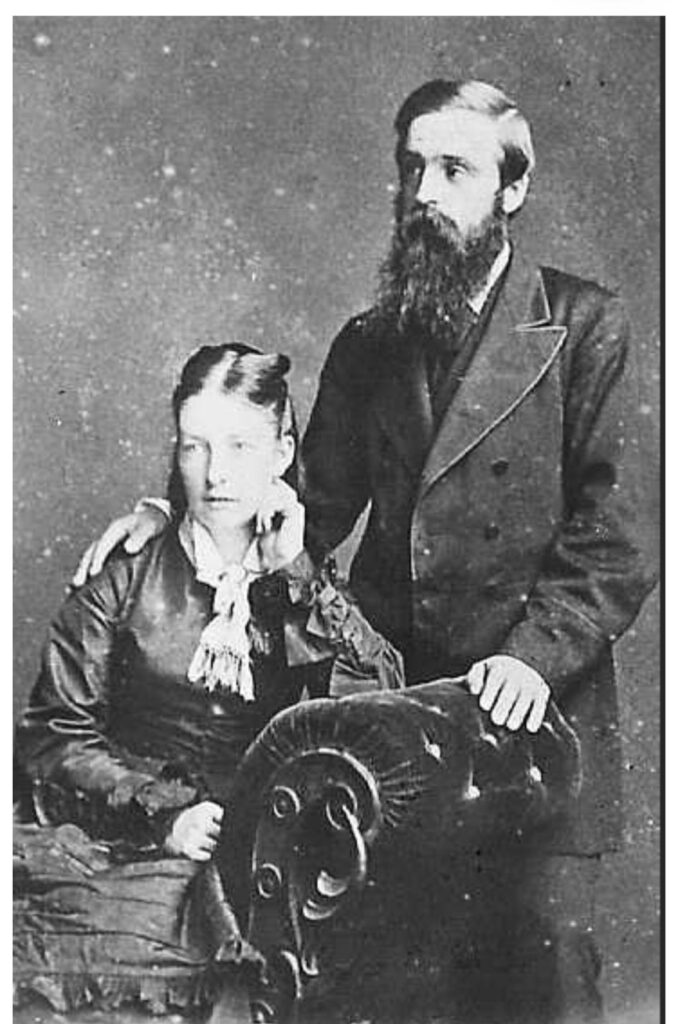
On the morning of 27 January 1891, the quiet Suffolk village of Bacton became the scene of a tragedy that would shock the local community.
At around half past nine, Emma Shelley Hearn was carrying out her usual household duties in the kitchen of Oak House. Her youngest daughter was nearby, and there was little to distinguish the morning from any other. When her husband, Charles Walter Hearn, entered the room, their conversation turned to an elderly villager whom Emma had been helping. She suggested that he might go out and shoot a rabbit for the man.
Charles agreed and left the kitchen to fetch his double-barrelled breech-loading gun from his office.
To all appearances, there was no cause for concern. The weapon had not been used for more than two months and was believed to be unloaded. Returning to the kitchen with the gun tucked under his arm and two cartridges in his hand, Charles continued the ordinary routine of the morning. Emma handed him another cartridge while they spoke.
Then, without warning, disaster struck.
The gun suddenly discharged. Unknown to either husband or wife, one barrel remained loaded. The shot struck Emma, who fell immediately. The cartridge she had just been holding remained in her hand.
Realising what had happened, Charles rushed to her side. Medical assistance was summoned at once, and Mr Cuthbert of Mendlesham attended as quickly as possible. However, the devastating truth soon became clear. Emma’s injuries were fatal, and nothing could be done to save her.
An inquest was held to investigate the circumstances of the shooting. Witness testimony and evidence confirmed that the incident was entirely accidental. The tragedy stemmed from the mistaken belief that the gun was unloaded, a fatal assumption that transformed an ordinary household moment into a catastrophe.
For the people of Bacton, the event served as a painful reminder of how fragile life could be. There had been no quarrel, no recklessness, and no intention to cause harm. Instead, a routine conversation in a family kitchen ended in irreversible loss.
Just three days later, on 30 January 1891, Emma Shelley Hearn was buried in Bacton. Today, more than a century later, her story remains a poignant reminder of the human tragedies hidden within local newspaper reports and parish records, moments when ordinary lives were suddenly and irrevocably changed.