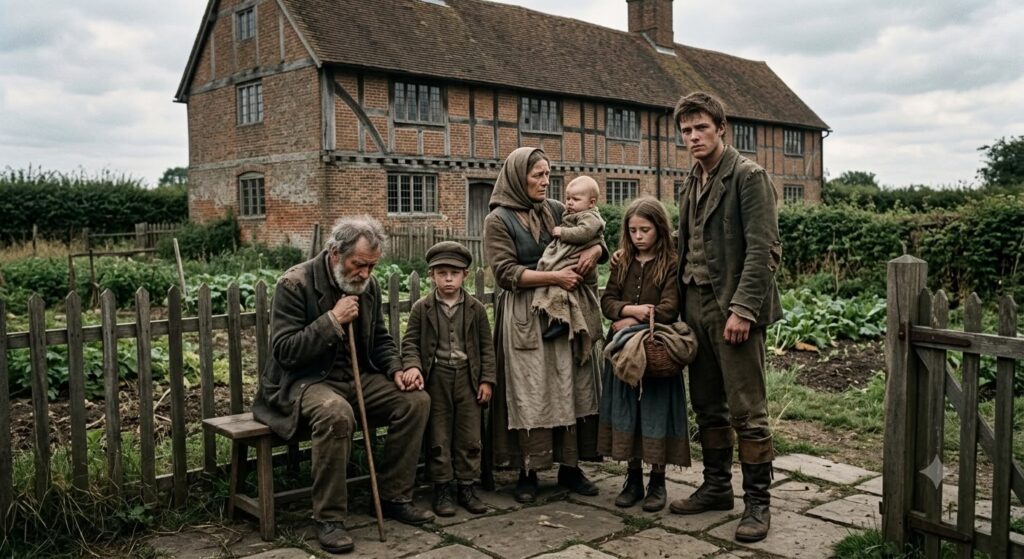
The Pizzey Family: Generations in the Shadow of the Old Poor Law
For the Pizzey family, poverty was not a passing hardship but a burden that persisted across generations. Long before the introduction of the New Poor Law in 1834, families such as the Pizzeys relied on parish relief and parish workhouses during periods of extreme need. Their story reveals the lived experience of poverty in rural Suffolk and the limited options available to those on the margins of society.
The Suffolk countryside often conjures images of prosperous farms and quiet villages, yet for many labouring families life was marked by insecurity. Employment could be seasonal, wages were low, and even a short period of illness or unemployment could lead to dependence on parish support. The Pizzey family appear repeatedly within surviving parish records, demonstrating how difficult it was for some families to escape poverty once hardship had taken hold.
The records reveal a pattern that stretched across generations. Parents and children experienced many of the same struggles, relying on parish relief when work was scarce or circumstances became desperate. Poverty was not simply an individual problem but a family experience that could persist for decades. For some, survival meant living on the edge of the law, with theft, poaching, and other minor offences often linked to economic necessity rather than criminal intent.
What stands out most is the continuity. The same family names reappear throughout the records, illustrating how hardship could be passed from one generation to the next. The parish system offered assistance, but it rarely provided a route out of poverty. Instead, it often helped families survive from one crisis to the next.
The story of the Pizzey family provides an important insight into the realities of life under the Old Poor Law. Their experiences remind us that poverty was a persistent feature of rural life and that many Suffolk families faced challenges far removed from the idealised image of the English countryside. By tracing their history, we help ensure that the lives of ordinary people, often overlooked in historical accounts, are not forgotten.