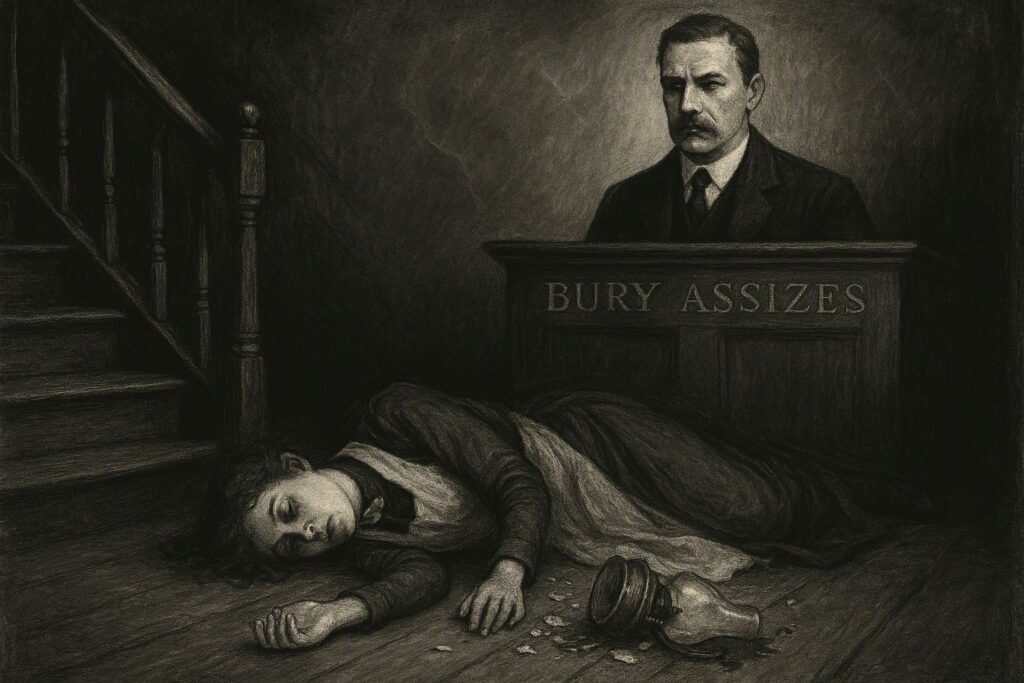
In the early hours of 1 June 1902, during a violent summer storm, a young servant’s life ended in a quiet Suffolk village, leaving behind a mystery that has never been resolved.
Peasenhall is usually a peaceful place, but that night Providence House became the scene of a brutal killing. Rose Harsant, a twenty two year old domestic servant, was found dead at the foot of the stairs. Her throat had been cut, and broken glass from a paraffin lamp lay around her. Outside, thunder and heavy rain drowned out any sound that might have raised alarm.
Attention quickly turned to William Gardiner, a local foreman and prominent member of the Primitive Methodist chapel. Although known for his respectability, there had been talk in the village of a relationship between him and Rose. A letter found near the body, said to be from Gardiner, appeared to arrange a late night meeting. At the inquest, it was revealed that Rose was around six months pregnant. The prosecution claimed Gardiner had acted to protect his position and reputation.
The case went to trial twice at the Bury St Edmunds Assizes. Each time, the evidence remained uncertain. A footprint, a missing knife, and witness accounts raised suspicion, but nothing directly linked Gardiner to the murder. Both juries failed to agree. Eventually, the Crown abandoned the case, and Gardiner was released.
Rose was buried in Peasenhall churchyard, and the case became known as the Peasenhall Mystery. It still raises questions. Was Gardiner responsible, or was he caught up in village suspicion? More than a century on, it remains an unsettling glimpse into a community where reputation, secrecy, and doubt left a crime unresolved.