In March 1891, an inquest held at the Ipswich and East Suffolk Hospital examined the death of Walter Bennett, a 30-year-old labourer from Rushmere.
Walter was the son of James Bennett of Clopton and worked for Mrs King of Rushmere. On the evening of 20 March, he attended the Woodbridge Horse Show before stopping at the Admiral’s Head in Bealings with friends and acquaintances, including George Brown and Harry Nunn.
Witnesses stated that Walter had been drinking, but was not considered intoxicated. At around ten o’clock he began his journey home. Brown and Nunn also left and, after passing Walter on the road and exchanging goodnights, continued on their way.
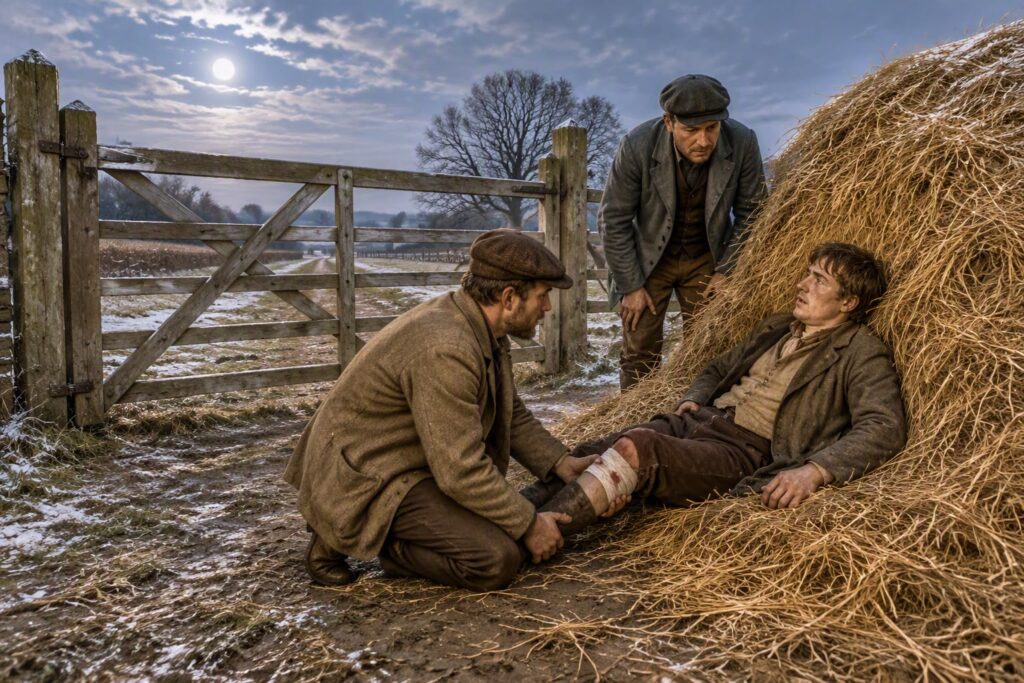
Approximately ten minutes later, Brown remembered that Walter had left a parcel behind. Returning with Nunn, they found him lying in a meadow near a high gate. Walter told them he had injured his neck but refused to go home with them. Rather than seeking further assistance, the two men carried him to a nearby straw stack, covered him with straw, and left him there for the night.
The following morning Brown returned and found Walter in the same place. He was still alive but complained of an injured leg and said he had fallen over the gate the previous evening. Walter was then taken to the East Suffolk Hospital.
Medical evidence revealed that he had suffered a fractured spine. Although he survived for some time after admission, his condition deteriorated. The immediate cause of death was recorded as oedema of the lungs, brought on by complications associated with the spinal injury.
Hospital staff testified that Walter had told them he fell from a gate and that two men had subsequently placed him on a straw stack. He made no complaint against them, but the circumstances surrounding his treatment on that bitterly cold night became a major focus of the inquest.
The coroner was critical of Brown and Nunn, describing their actions in leaving an injured man outdoors under a little straw as inhumane. Although the medical evidence could not establish whether the exposure directly caused or accelerated Walter’s death, the jury expressed their clear disapproval.
The verdict was one of accidental death. However, the jury also recorded their indignation at what they described as the heartless and cruel manner in which Walter Bennett had been left exposed to the elements. For many in attendance, this aspect of the case was as troubling as the accident itself.
More than 130 years later, Walter Bennett’s story provides a stark reminder of the dangers faced by rural labourers and of the expectations Victorian communities placed upon neighbours in times of need.